
You heard someone say “that was pure crack” and now you are standing there wondering if you just witnessed a confession or a compliment. Relax. In crack meaning slang, nobody is talking about anything illegal. The word “crack” has a surprisingly rich and layered life in informal language, and once you understand it, you will start noticing it everywhere. This article breaks it all down clearly, from its core meaning to exactly how and when to use it.
What Does Crack Mean in Slang?
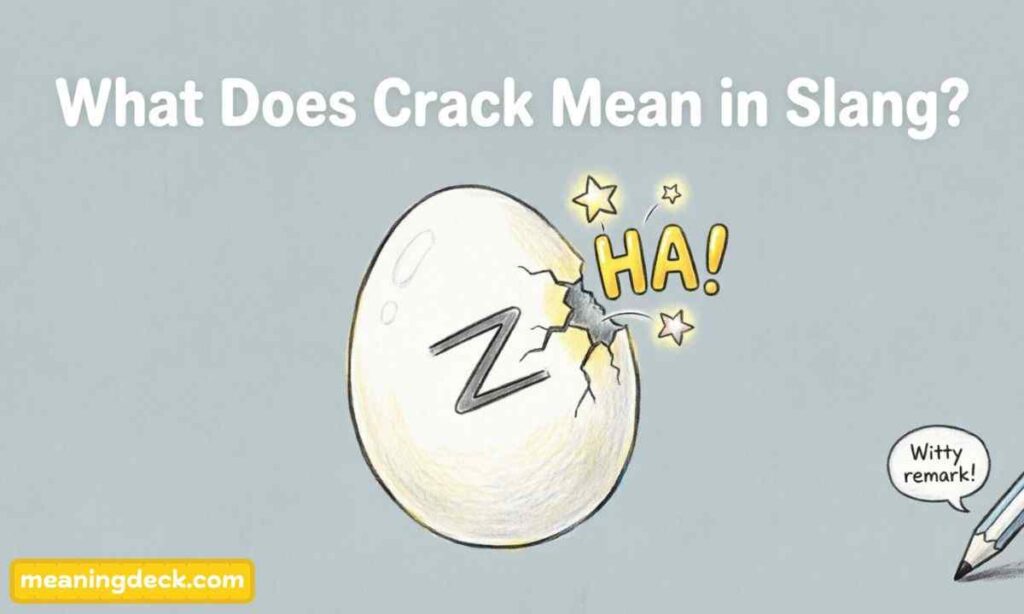
In slang, crack most commonly means fun, laughter, good conversation, or an enjoyable time. If something is described as “good crack” or “great crack,” it means the experience was entertaining, lively, and worth being part of.
It also carries a second common meaning: crack can refer to a sharp, witty comment or joke. When someone makes a clever remark at just the right moment, that is called “a crack.”
So depending on the sentence, crack is either describing an experience or describing a verbal jab. Both uses are positive, casual, and very much a part of everyday informal speech.
Where Does the Slang “Crack” Actually Come From?
Read This: IDM Meaning: What Does IDM Meaning in Text, Music, and Everyday Life?
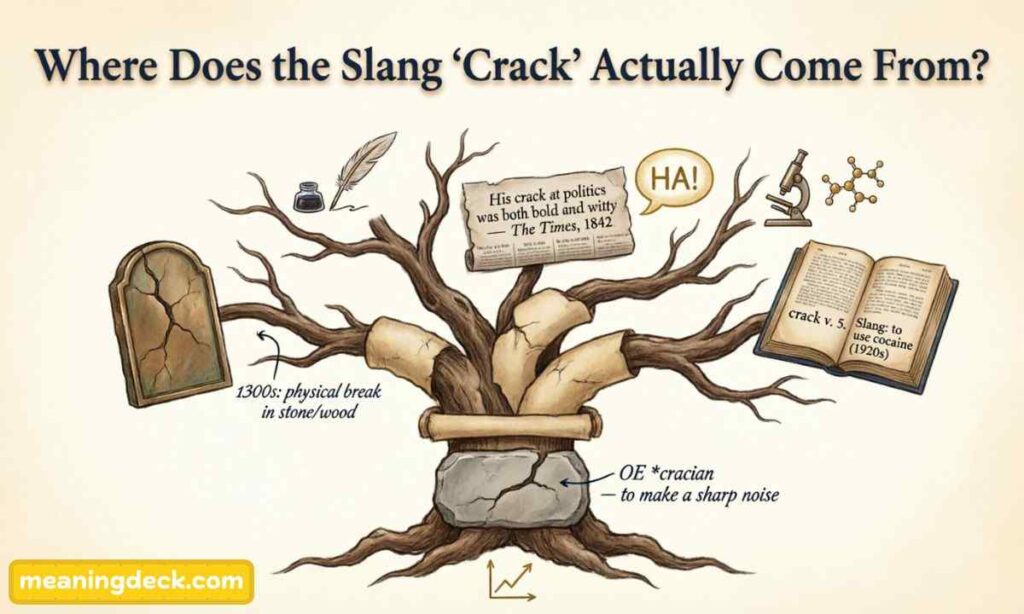
This is where things get genuinely interesting. The slang use of crack did not come from nowhere. It has deep roots in the Irish and Scottish Gaelic word “craic,” which carries the meaning of fun, news, gossip, and lively social entertainment.
The word traveled through centuries of spoken language before landing firmly in modern English slang. Communities across Ireland and Scotland have used some version of this word for generations to describe the atmosphere of a good gathering, a lively pub night, or simply great company.
Here is the twist though. The English word “crack” was actually used informally to mean “conversation” or “news” as far back as the 15th century, well before the Gaelic spelling became popular. Some historians argue the Gaelic “craic” was actually borrowed from old English, not the other way around. The debate still runs among linguists, which is itself a kind of crack, if you think about it.
The historical depth here matters because it shows that this word has always been about human connection. It was never just slang for slang’s sake. It pointed to something real: the energy between people when a conversation or gathering is truly alive.
The Biblical and Cultural Thread Behind the Word
The concept behind crack as slang connects to something much older than any internet trend. Across cultures and throughout history, lively speech, wit, and the joy of good company were considered genuine gifts.
In Proverbs 17:22, the Bible says that a cheerful heart is good medicine. That idea, that humor and good conversation carry real value, is exactly the spirit that crack as slang captures. Communities have always gathered around people who bring energy, laughter, and good talk. Crack was simply the word that gave that energy a name in certain cultures.
Ancient Greek culture valued wit as a mark of intelligence. The Romans celebrated “urbanitas,” a kind of polished, clever humor in social settings. Irish literary tradition has long celebrated storytelling, banter, and the art of conversation as essential parts of life.
Crack as slang is not a shallow modern invention. It sits in a long tradition of human beings finding a word for what makes a gathering worth attending.
The Many Ways Crack Shows Up in Slang
The word does not operate in just one mode. Here is how it actually moves through different contexts:
“Good crack” or “great crack”: Describes a fun experience, a lively event, or an enjoyable person to be around.
“A crack”: Refers to a witty or sharp remark, often humorous and quick.
“What’s the crack?”: A greeting or question meaning “What is going on?” or “What is the news?” Very common in Irish and Northern English speech.
“Any crack?”: Same energy as above, used to ask if anything interesting or funny has happened.
“He is great crack”: Means a person is entertaining, funny, and enjoyable company.
“Cracking”: An adjective meaning excellent, first-rate, or impressive. “That was a cracking performance.”
Each of these uses carries the same core energy: liveliness, wit, and the quality of an experience or person.
Crack vs Craic: Are They the Same Thing?
You will see both spellings floating around and it is fair to wonder if they mean different things. Here is a clear side-by-side:
| Term | Spelling Origin | Common Usage | Region |
| Crack | English | Fun, a witty remark, lively time | UK, Ireland, general |
| Craic | Irish Gaelic | Fun, gossip, lively social atmosphere | Ireland primarily |
| Cracking | English adjective | Excellent, impressive, first-rate | UK, Australia |
| What’s the crack? | English phrase | What is going on? Any news? | Northern England, Ireland |
The short answer: crack and craic mean the same thing. The spelling just depends on the cultural and regional context. In Ireland, you will often see “craic” used with pride as a distinctly Irish cultural marker. In England and other regions, “crack” is more common.
Using either spelling is acceptable. Knowing both helps you read a room, or in this case, a text thread.
Real-Life Examples of Crack in Slang
Examples make the meaning click faster than any definition. Here are some natural uses:
Example 1 (Describing an event): “Last night was brilliant. Pure crack from start to finish.”
Example 2 (Asking for news): “Hey, what’s the crack? Haven’t seen you in ages.”
Example 3 (Describing a person): “You have to meet her. She is absolutely great crack.”
Example 4 (A witty remark): “He made a crack about the weather and the whole room laughed.”
Example 5 (Using “cracking” as an adjective): “That was a cracking match. Best I have seen all season.”
In every case, the word carries warmth, energy, and informality. Nobody uses crack in this sense when they are angry or being formal. It lives in good-natured, relaxed speech.
Why People Love This Word So Much?
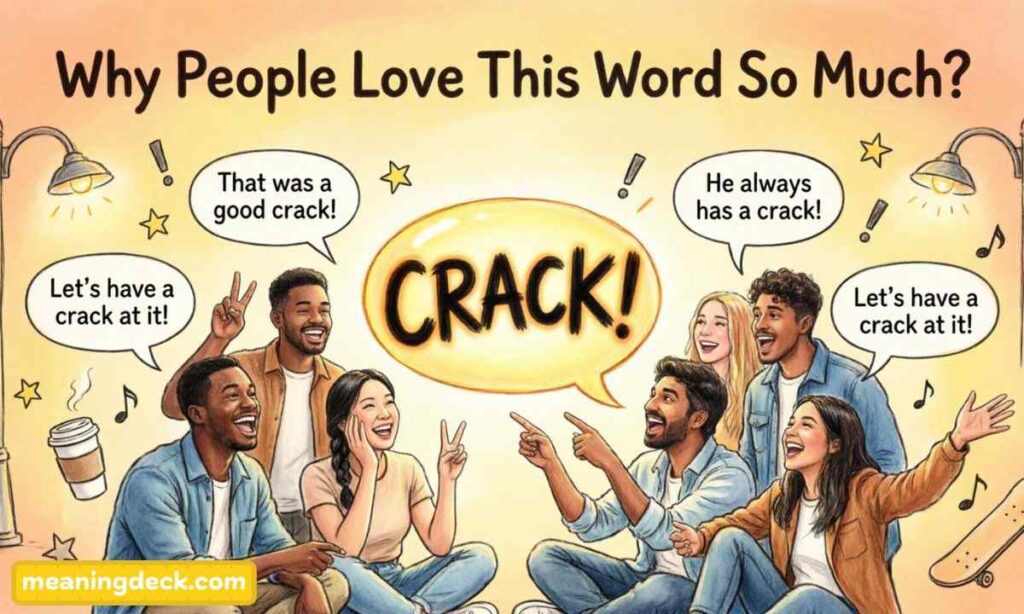
There is a reason crack stuck around for centuries. It does something very few words can: it captures an entire feeling in one syllable.
Saying “we had great crack” communicates not just that you enjoyed yourself, but that the conversation was alive, the company was right, the energy was there. It is efficient and expressive at the same time.
In a world where people send voice notes and type in shorthand, a word that packs atmosphere into four letters is genuinely useful. Crack earns its place.
Common Mistakes People Make With Crack Slang
A few misunderstandings come up consistently, and they are worth knowing before you start using the word yourself.
Mistake 1: Assuming it is always about drugs. The slang use of crack has nothing to do with any substance. When someone says “the crack was brilliant,” they are talking about the atmosphere of an evening, not anything illegal. Context makes this clear almost immediately, but the confusion still trips people up.
Mistake 2: Using “craic” in a non-Irish setting and having no one understand. The Gaelic spelling is culturally specific. In a general English-speaking conversation, “crack” will land better. Save “craic” for contexts where the Irish reference adds meaning.
Mistake 3: Misreading “What’s the crack?” as aggressive or confrontational. It is not. It is one of the friendliest greetings in informal British and Irish speech. Think of it as “What is up?” with a bit more character.
Mistake 4: Overusing “cracking” to the point it loses meaning. When everything is cracking, nothing is cracking. Use it when something genuinely impresses.
Related Slang That Travels in the Same Company
If crack feels at home in a sentence, these expressions often show up nearby:
Banter: Light-hearted, witty back-and-forth conversation. Very close in spirit to crack. If the crack is good, there is usually banter involved.
Cheeky: Describes something slightly bold, playful, or mischievous in a likeable way. “A cheeky crack” is a remark that pushes the line just enough to get a laugh.
Cracker: Used to describe something or someone excellent. “That joke was a cracker.” Shares the same root energy as cracking.
Gas: Used especially in Ireland to mean something funny or entertaining. “That was gas” and “that was great crack” often mean the same thing in Irish conversation.
These words often cluster together in the same conversations, the same regions, and the same tone of voice.
Read This: Casi Algo Meaning: The Most Beautifully Frustrating Phrase in Spanish
Which Version Should You Use?
If you want to use this slang naturally, here is a simple guide:
Use “crack” when speaking or writing in general informal English, especially in the UK, Australia, or North America where the Gaelic spelling is less familiar.
Use “craic” when you are writing specifically about Irish culture, speaking with an Irish audience, or in a context where the cultural reference adds something meaningful.
Use “cracking” as a standalone adjective when you want to call something excellent without any ambiguity about meaning.
Use “What’s the crack?” as a greeting when you want to ask someone what is going on in a warm, casual way.
The word adapts to the situation. Trust the context and you will use it correctly.
Frequently Asked Questions
Does crack in slang always mean fun?
Not always in exactly the same way. Crack can mean the overall fun and atmosphere of a situation, but it can also refer to a single witty remark. The surrounding sentence usually makes it clear which meaning is in play. “Good crack” refers to an experience. “He made a crack” refers to a joke or comment.
Is crack slang offensive?
No. In its slang form, crack is a positive and friendly word. It refers to enjoyment, wit, and good company. The only confusion arises because the word shares spelling with a term from a completely different context. The tone and sentence structure always make the slang use clear.
Is this slang dying out or still common?
It is very much alive. The word crack and craic remain widely used across Ireland, the UK, and in communities with strong ties to those cultures. Younger generations use it naturally alongside more modern slang, which suggests it is not going anywhere soon.
Final Thoughts
Crack in slang means fun, lively conversation, a witty remark, or a good time overall. It is one of those rare words that has been around for centuries and still sounds fresh in a modern sentence.
It came from communities that valued wit, storytelling, and the energy of a room where everyone is truly enjoying themselves. It survived because it captures something real that other words just do not quite nail.
Use it confidently, use it in the right company, and you will sound less like someone who just learned a new word and more like someone who has been saying it all along. And honestly? That is pretty cracking.

Welcome to MeaningDeck! I’m Alex, an AI-Powered SEO, and Content Writer with 2 years of experience.
I help websites rank higher, grow traffic, and look amazing. My goal is to make SEO and web design simple and effective for everyone.
Let’s achieve more together!