

Someone just texted you “mk” and now you are staring at your phone wondering if they are annoyed, agreeing, or just lazy with the keyboard. You are not alone. MK meaning in text confuses a surprising number of people because it looks too simple to mean much. But it does mean something specific. MK means “mmkay” or “okay” in texting, a casual, slightly drawn-out version of agreeing or acknowledging something, often with a quiet tone behind it.
What Does MK Mean in Text?
MK stands for “mmkay” which is itself a relaxed, informal version of “okay.”
When someone sends you mk, they are essentially saying yes, fine, alright, or I acknowledge what you said. It is not enthusiastic. It is not rude. It sits right in the middle, a soft agreement that does not add much emotion either way.
Think of it as the texting equivalent of someone nodding slowly without saying a word. You said something. They received it. Message acknowledged. That is the full transaction.
The Different Tones MK Can Carry
This is where mk gets genuinely interesting, and where most explanations stop too early.
The same two letters can carry completely different energy depending on the conversation. Context is everything with this word.
MK as neutral agreement: Someone says “Meet me at 6.” You reply “mk.” Clean, simple, no drama.
MK as mild passive disagreement: Someone says “Can you do this by tomorrow?” You reply “mk.” Translated: fine, but I am not thrilled about it.
MK as a conversation ender: Someone is explaining something at length. You reply “mk.” That usually signals you have heard enough and want to move on.
MK as soft disinterest: When someone shares exciting news and gets back “mk,” they will probably feel a little stung. That single word communicates low energy without being openly rude.
So one word, four different vibes. Reading which one is being used requires paying attention to what came before it.
Read This: Ion Meaning Text: The Simple Answer You Need Right Now
Where Did MK Come From? The Origin of This Slang
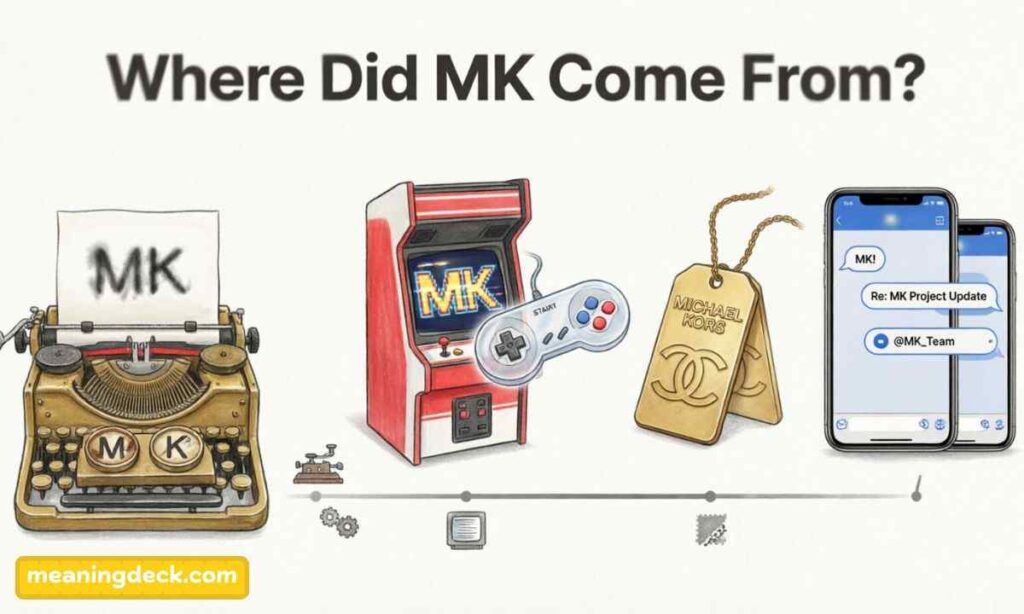
MK traces back to a phrase most people recognize instantly: “mmkay.”
Mmkay itself became widely popular through the TV show South Park, where the character Mr. Mackey used it constantly as a slow, drawn-out form of okay. His delivery made it iconic, a slightly passive, slightly condescending acknowledgment that became a punchline and then became actual language.
From spoken mmkay, the natural next step was shortening it for texting. When SMS messaging became mainstream in the early 2000s, people were already compressing words aggressively. “Okay” became “ok,” “ok” became “k,” and the mmkay version became “mk.”
By the time smartphones arrived and messaging moved to apps, mk was already deeply embedded in casual digital conversation. It traveled across platforms, from SMS to WhatsApp to Instagram DMs to Snapchat, and it stuck everywhere it landed.
Is There a Historical or Philosophical Root to This Kind of Language?
This might feel like a stretch, but bear with it because it is genuinely interesting.
The idea of brief, loaded acknowledgment is far older than the internet.
In ancient Roman culture, a nod or a single word of acknowledgment from a person of authority carried enormous weight. Soldiers, senators, and emperors communicated approval or dismissal with minimal expression. The fewer words used, the more power the speaker implied.
In Japanese communication culture, the concept of “ma” describes meaningful pause and minimal response as a sign of deep understanding, not indifference. Saying little while conveying much is considered sophisticated, not lazy.
Even in Biblical texts, short acknowledgments carry significant weight. In Matthew 5:37, the instruction given is “Let your yes be yes and your no be no.” The point is directness. Say what you mean in the fewest words possible. MK fits right into that lineage, a word stripped to its absolute minimum to convey a clear enough response.
MK vs. Similar Short Responses: A Quick Comparison
Seeing how mk compares to other short replies makes its meaning much clearer.
| Term | Full Form | Typical Tone | Best Used When |
| MK | Mmkay / Okay | Neutral to mildly flat | Casual acknowledgment |
| K | Okay | Can feel cold or curt | Very casual or lazy reply |
| OK | Okay | Neutral and standard | Standard agreement |
| Okay | Okay | Formal, fully spelled out | When tone matters |
| Sure | Sure | Warmer agreement | Friendly acceptance |
| Noted | Noted | Professional | Work or formal settings |
| Got it | Understood | Engaged and clear | When clarity is important |
As the table shows, mk sits in a unique spot. It is softer than k (which often reads as passive aggressive) but less energetic than sure or got it. It is the Switzerland of one-word replies.
Real Life Examples of MK Used in Text Conversations
Seeing it in actual conversation format removes all remaining confusion.
Example 1 (Simple Agreement): Friend: “I will pick you up at noon.” You: “mk” Meaning: Sounds good, confirmed, no issues.
Example 2 (Reluctant Acceptance): Parent: “You need to finish your homework before going out.” Teen: “mk” Meaning: Fine. I will do it. Not happy about it, but fine.
Example 3 (Ending a Conversation): Someone: “So basically I was saying that the whole situation could have been handled differently and if you think about it from my perspective you would understand why I reacted the way I did.” You: “mk” Meaning: I have heard enough of this. Moving on.
Example 4 (Low Enthusiasm Response): You: “I just got promoted!” Them: “mk” Meaning: Congratulations, technically. But also, where is the energy? This one stings a little.
Does MK Have Any Other Meanings?
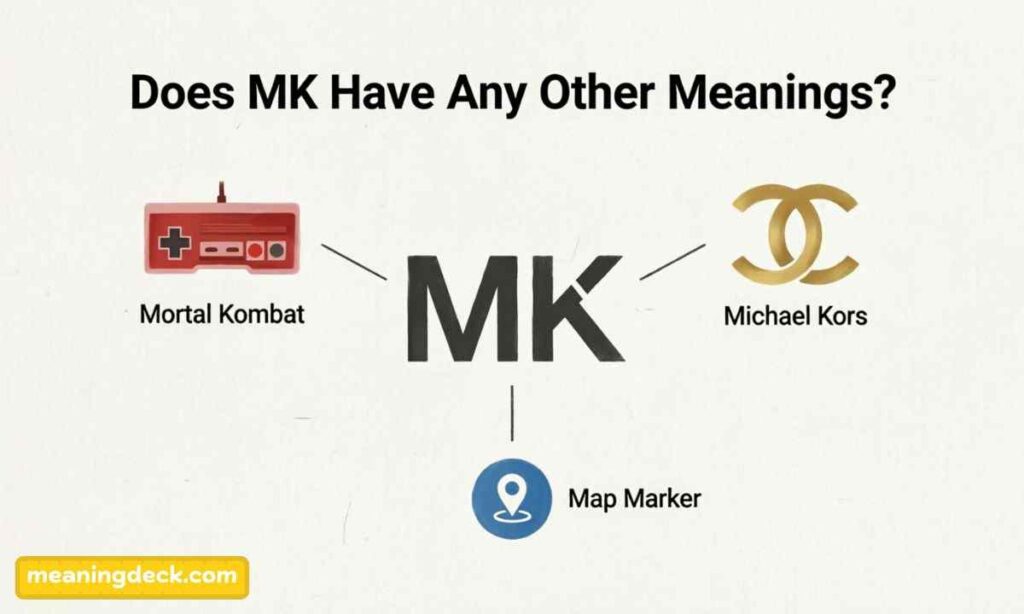
Yes, and this is worth knowing to avoid confusion in the wrong context.
MK carries a few other meanings depending on where it appears:
Mortal Kombat: In gaming communities, MK is the universally recognized abbreviation for the Mortal Kombat franchise. If someone in a gaming chat says “MK,” they are almost certainly talking about the game, not agreeing with you.
Mario Kart: Among Nintendo fans, MK often refers to Mario Kart. Same situation, completely different world from texting slang.
MK Ultra: In discussions about history or conspiracy topics, MK sometimes references MK Ultra, the controversial CIA program from the mid-twentieth century. That is a very different conversation entirely.
Mk as a name abbreviation: In some informal writing, MK can stand for a person’s initials. Context will usually make this obvious.
So if you receive mk in a casual text from a friend, you are almost certainly looking at the “okay” meaning. If it appears in a gaming forum, think joysticks, not acknowledgment.
Common Mistakes People Make With MK in Text
A few simple errors can cause real misunderstandings with this word.
Mistake 1: Sending mk when enthusiasm is expected. If someone shares big news and you reply mk, you are going to come across as indifferent even if you did not mean it that way. Match the energy of the moment.
Mistake 2: Assuming mk always means happy agreement. It does not. As covered earlier, mk can mean reluctant acceptance or even quiet frustration. Do not assume everything is fine just because someone sent mk.
Mistake 3: Using mk in professional communication. Do not send your manager or a client mk in response to anything. Ever. Use “understood,” “noted,” “sounds good,” or even a full “okay” when the setting calls for it. Slang has no place in professional emails or work messages.
Mistake 4: Confusing mk with k. While they are similar, k tends to feel sharper and colder. MK is slightly softer. If someone is bothered and sends you k, that is more loaded than mk. The extra letter genuinely matters here.
Which One Should You Use: MK, K, or Okay?
Here is the simple breakdown.
Use mk when:
- The conversation is casual and with friends or close contacts
- You want to acknowledge something without adding much emotion
- You are agreeing to a plan without strong feelings about it
Use k when:
- You want to be very brief and do not mind if it reads slightly cold
- The conversation is extremely casual and tone does not matter
Use okay or sounds good when:
- Tone matters and you want to come across as engaged
- The other person shared something meaningful
- You are texting someone you want to impress or maintain warmth with
Use understood or noted when:
- The context is professional or semi-professional
- You want to sound attentive and clear
The choice between them is really a choice about how much warmth you want to project. MK is neutral. K is cool. Okay is standard. Sounds great is warm. Pick the one that matches the relationship and the moment.
How Context and Punctuation Change MK Completely?
One small detail that almost nobody mentions: punctuation transforms mk.
“mk” with no punctuation: neutral, casual, completely standard.
“mk.” with a period: this reads as noticeably cold and final in texting culture. A period in a short reply signals a closed conversation and often mild tension.
“mk!” with an exclamation mark: this is noticeably warmer and more enthusiastic than plain mk. It lifts the mood of the reply significantly.
“MK” in all caps: depending on context, this can read as either emphasis or irritation. Proceed with awareness.
It is a small thing, but in text conversations where facial expressions and voice tone are completely absent, punctuation does a lot of heavy lifting.
Read This: CTFU Meaning Slang: The Clear, Simple Answer You Were Looking For
Why MK Has Stayed Popular Despite Newer Slang?
New slang arrives constantly. Words like “slay,” “based,” “lowkey,” and “no cap” all had their moment, and some faded faster than others. But mk has shown remarkable staying power.
The reason is simple: it fills a specific gap in digital communication that nothing else fills quite as well. Sometimes you need to acknowledge something without committing to enthusiasm. Sometimes you just need to say “I heard you” without writing a paragraph. MK does exactly that in two letters.
It is also completely platform-neutral. It works in WhatsApp, iMessage, Instagram, Snapchat, Twitter DMs, and basically every messaging platform that exists. That kind of universal usability keeps a word alive longer than trend-based slang.
Frequently Asked Questions
Is mk rude to send?
Not by itself, but tone is everything. In a neutral context, mk reads as fine. In a context where someone expects enthusiasm or warmth, mk can come across as cold or dismissive. Read the room before sending it.
Is mk the same as k?
They are close but not identical. MK carries a slightly softer, more relaxed energy than k. The letter k alone tends to feel sharper and colder, especially with a period after it.
Can mk be used in professional settings?
No. Keep mk strictly in casual, personal conversations. In work-related messages, use clear and complete language like “understood,” “confirmed,” or “noted” to communicate professionally.
Final Thoughts
MK looks like the simplest possible reply, two letters, no effort. But as you have seen, it carries real layers of meaning depending on context, tone, punctuation, and relationship.
At its core, it means “okay” in the most relaxed possible way. Beyond that, it can signal anything from easy agreement to quiet reluctance to mild disinterest. The next time someone sends you mk, you will read it properly. And the next time you reach for mk as a reply, you will know exactly what message you are actually sending.

Welcome to MeaningDeck! I’m Alex, an AI-Powered SEO, and Content Writer with 2 years of experience.
I help websites rank higher, grow traffic, and look amazing. My goal is to make SEO and web design simple and effective for everyone.
Let’s achieve more together!