
You keep seeing it everywhere. Someone posts something online, and instantly ten people reply with “you’re such a bot.” You laugh nervously, unsure if it’s a compliment or an insult. (Spoiler: it is absolutely not a compliment.) Bot in slang means a person who acts robotic, fake, or completely lacking in original thought. If you are copying others, giving lifeless responses, or following the crowd without thinking, congratulations. You have just earned yourself the bot label.
What Does Bot Mean in Slang?
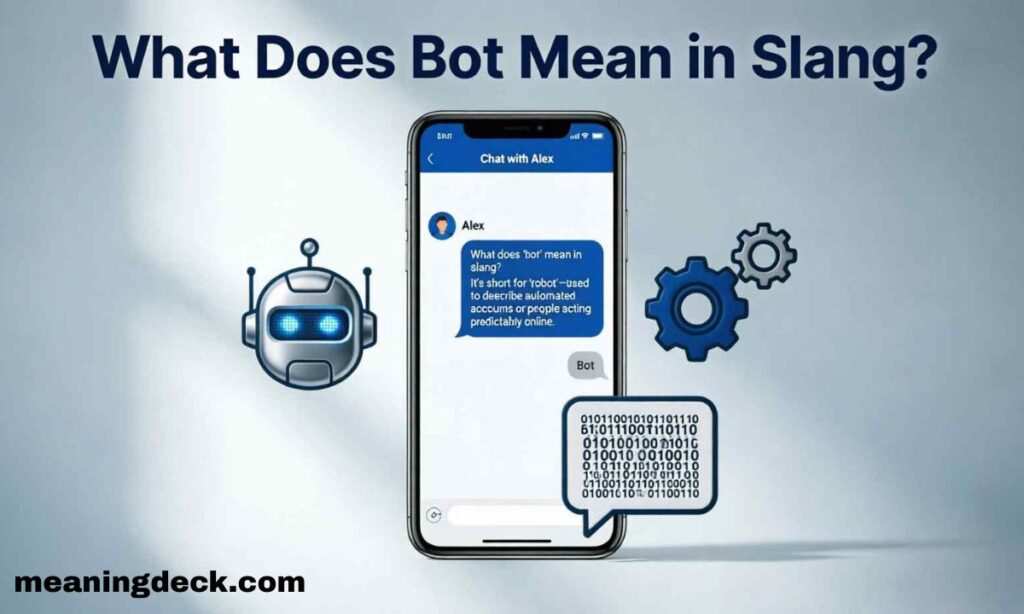
In everyday slang, “bot” refers to someone who behaves like a computer program instead of a real human being. Think of it this way: a bot follows instructions, repeats patterns, and has zero personality of its own.
When someone calls you a bot in an online conversation, they are saying you sound scripted, unoriginal, or fake. It is not a technical term here. It is a social one.
“You’re such a bot” translates directly to: You have no original thoughts. You are just copying or repeating like a machine.
Where Did the Word “Bot” Actually Come From?
Read This: Mhm Meaning: What It Really Means and How to Use It Right
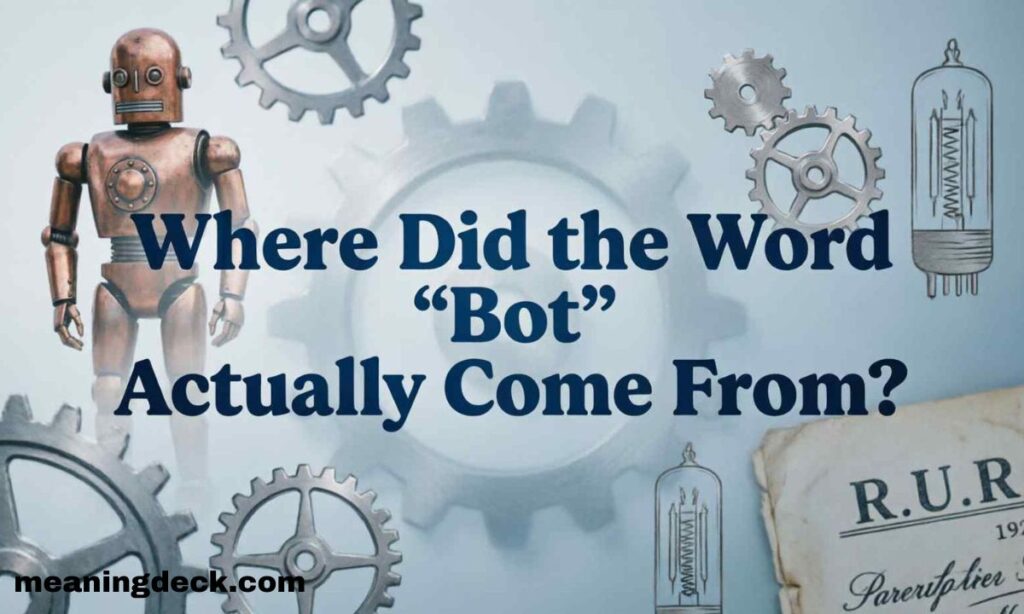
The word bot is simply a shortened form of “robot.” Robots, as we know, are machines built to perform repetitive tasks without creativity or independent thinking.
The internet took that concept and turned it into slang. In the early days of online gaming, a bot was literally an automated program pretending to be a human player. Gamers started calling weak or predictable players “bots” as an insult, meaning: you play like a machine, not a real person.
From gaming, the term leaked into social media culture. By the time platforms like Twitter, TikTok, and Instagram exploded in popularity, calling someone a bot became a standard way of saying they were fake, hollow, or unoriginal.
The Historical Thread: Robots and the Fear of the Mechanical
Here is something interesting. The fear of people becoming robotic is not new at all.
The word “robot” itself comes from the Czech word “robota,” meaning forced labor or drudgery. It was introduced in a 1920 play called R.U.R. by Karel Čapek, which explored the idea of artificial beings who work without free will.
Even biblical literature carries this theme. In the Book of Ezekiel, the prophet describes wheels within wheels and mechanical-looking visions. Scholars debate the meaning, but the idea of something that moves perfectly yet lacks a soul has always unsettled humanity.
Calling someone a bot taps into that ancient discomfort. It says: you are moving, you are functional, but there is nothing real inside.
Bot vs. NPC: What Is the Difference?
These two slang terms often get confused, but they are not the same thing.
| Term | What It Means | When People Use It |
| Bot | Fake, scripted, or automated behavior | When someone repeats talking points or seems hollow |
| NPC | Non-Player Character, someone with no independent thought | When someone blindly follows trends or group opinions |
| Shill | Someone promoting something for personal gain | When someone seems paid or biased in their opinion |
| Simp | Someone who over-praises another person | When someone is excessively agreeable or desperate |
The key difference: a bot feels fake and scripted. An NPC feels real but completely mindless. If a bot is a machine, an NPC is a background character in a video game who only says one line and never evolves.
Real-Life Examples of “Bot” Being Used in Slang
Seeing it in context makes everything click faster. Here are natural examples:
Example 1: “Every comment this account posts is the same. Total bot energy.” (Meaning: the account seems automated or fake.)
Example 2: “Bro just repeated what the YouTuber said word for word. He’s such a bot.” (Meaning: the person has no original thinking.)
Example 3: “Stop being a bot and say what you actually think.” (Meaning: stop being fake or scripted, be real.)
Example 4 (gaming context): “He missed every shot. He plays like a bot.” (Meaning: the player is terrible and mechanical, not skilled.)
The tone shifts based on context, but the core meaning stays the same: robotic, fake, or unoriginal.
“Bot” in Gaming vs. “Bot” in Social Media: Same Word, Different Shade
This is where most people get slightly confused. The word bot does double duty depending on where you hear it.
In gaming, calling someone a bot means they are a bad player. They move predictably. They make no smart decisions. They might as well be a computer program. It is an insult about skill level.
In social media and everyday conversation, calling someone a bot is about authenticity. It means they are fake, hollow, copy-pasting their personality from someone else, or saying things without any real conviction.
Both uses share one root idea: this person is not thinking for themselves.
Why Do People Call Others Bots Online?
Read This: SYBAU Meaning: What It Really Means and How to Use It Right
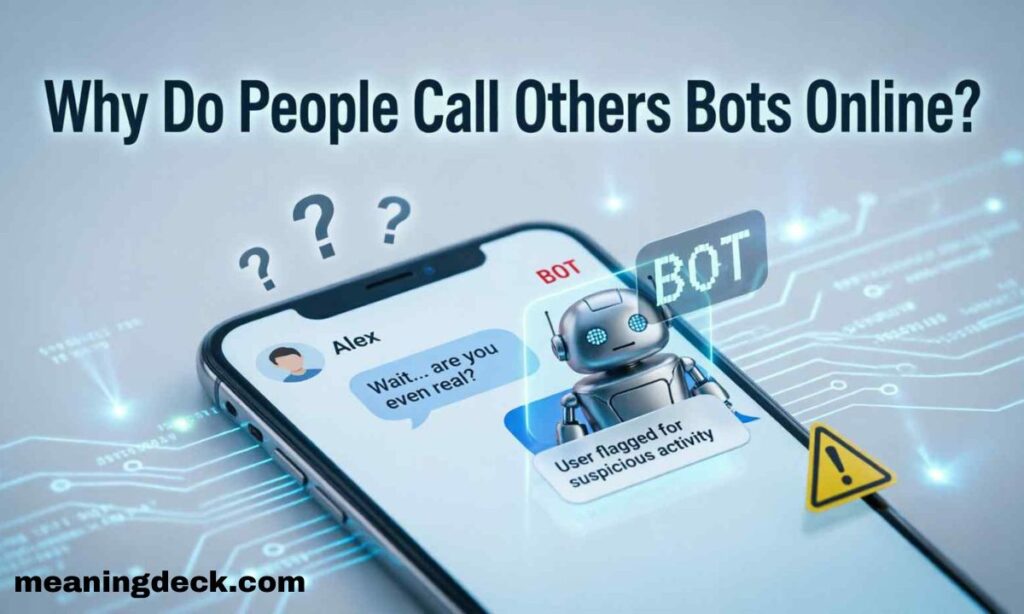
This slang became popular because it captures something very specific that older insults could not.
Words like “fake” or “basic” felt personal. Bot feels clinical. It removes the humanity from a person entirely, which actually makes it hit harder.
When social media started flooding with repetitive opinions, copied jokes, and account farms generating identical content, users needed a word for it. Bot filled that gap perfectly.
It also spread because online spaces are genuinely full of actual bots. Fake accounts, automated replies, spam comments. When a real person starts acting like one of those, the comparison becomes obvious and the insult writes itself.
Common Mistakes People Make With This Slang
A few mix-ups happen regularly with the word bot, and they are worth knowing:
Mistake 1: Thinking “bot” only means an actual robot account. No. When used in slang conversations, it almost always describes a real person behaving robotically. Context matters.
Mistake 2: Using it to mean someone is smart or efficient. Being called a bot is never a compliment in casual slang. Do not use it to praise someone for working fast or being productive. That will confuse everyone.
Mistake 3: Confusing bot with “basic.” Basic means someone follows mainstream trends without much originality. Bot goes further. It implies the person is not just unoriginal but actively fake or scripted. Bot hits harder.
Mistake 4: Overusing it until it loses meaning. Like any slang, if you call everything a bot, the word loses its punch. Save it for when it actually applies.
Which Slang Should You Actually Use?
If you want to describe someone online and you are unsure whether to say bot, NPC, or something else, here is a quick guide:
Use bot when someone seems fake, scripted, or automated in their behavior or responses.
Use NPC when someone seems real but completely mindless, just following the crowd with no individual thought.
Use basic when someone simply follows popular trends without any edge or originality.
Use shill when someone seems to be pushing an agenda or product for personal gain without being upfront about it.
When in doubt, bot is the most versatile option for online conversations because it covers fakeness, repetitiveness, and lack of original thought all at once.
How “Bot” Connects to Bigger Conversations About Authenticity
Here is the part most articles skip entirely.
The rise of bot as slang reflects something much bigger. We live in an age of copy-paste opinions, algorithm-driven content, and social media personalities built entirely on performing emotions rather than expressing them.
Calling someone a bot is not just an insult. It is a cultural statement. It says: I can tell the difference between something real and something manufactured. And you are manufactured.
As AI-generated content, automated replies, and deepfake personalities become more common online, the fear of being indistinguishable from a machine grows stronger. The slang bot is how internet culture pushes back and demands authenticity from real people.
Using “Bot” Without Sounding Like You Googled It First
If you want to use this word naturally without raising eyebrows, keep a few things in mind.
Say it in a context where fakeness or repetitiveness is obvious. Dropping it randomly just to sound current will ironically make you sound like a bot.
Keep it casual. “That’s such bot behavior” or “stop being a bot” flows naturally. Writing a formal paragraph and ending it with “therefore, you are a bot” is not the vibe.
Use it sparingly. The best slang lands because it is precise, not because it is everywhere.
Frequently Asked Questions
Is being called a bot always an insult?
In slang, yes, almost without exception. It implies you are fake, unoriginal, or robotic in your responses. There is no positive spin on it in casual conversation.
Can “bot” be used as a verb?
Not commonly. You would not say “he botted the conversation.” The word works best as a noun (“he’s a bot”) or as an adjective (“that’s bot behavior” or “total bot energy”).
Is “bot” used differently in gaming versus regular conversation?
Yes. In gaming it specifically means a bad or unskilled player who moves predictably. In social media and general conversation, it refers to someone who seems fake or scripted. Both come from the same root idea of robotic, unthinking behavior.
Final Thoughts
The beauty of understanding bot meaning in slang is that it teaches you something beyond vocabulary. It reminds you that authenticity is the most valuable thing you can bring to a conversation, online or offline.
Say what you actually think. Respond like a person, not a script. Disagree when you disagree. Laugh when something is actually funny.
That is all it really takes to avoid the label. And honestly, in a world increasingly full of automated voices and manufactured personalities, being genuinely human has never been more impressive.

Welcome to MeaningDeck! I’m Alex, an AI-Powered SEO, and Content Writer with 2 years of experience.
I help websites rank higher, grow traffic, and look amazing. My goal is to make SEO and web design simple and effective for everyone.
Let’s achieve more together!