

If you have ever watched someone react to stressful news with a shrug and a smile, you have seen nonchalance in action. But what happens when the mood shifts and someone shows genuine emotion, worry, or passion? That is the opposite of nonchalant at work. Knowing the right antonym helps you describe real human behavior with precision and depth.
Whether you are writing an essay, preparing for a vocabulary test, or simply trying to express yourself better, understanding the opposite of nonchalant enriches your language toolkit. This article covers 22 key antonyms, grouped by emotional category, complete with sentence examples, usage rules, and practice exercises to help them stick.
Definition of Nonchalant
Before exploring the opposite of nonchalant, it helps to know exactly what the word means. Nonchalant is an adjective that describes a person who appears calm, relaxed, and indifferent, often to the point of seeming unbothered by things that would concern most people. When someone acts nonchalant, they project an air of cool disengagement, as if nothing around them carries much weight.
Merriam-Webster defines nonchalant as “having an air of easy unconcern or indifference.” In everyday use, a nonchalant person might wave off a problem that others find serious, speak in a flat tone during an exciting event, or seem completely unaffected by pressure.
This word can carry a positive connotation, suggesting admirable composure, or a negative one, suggesting carelessness and apathy. Understanding both sides makes it easier to choose the right opposite of nonchalant in any context.
Structural Breakdown of “Nonchalant”
Read This: Opposite of Perspective: 35 Antonyms with Examples
The word “nonchalant” traveled into English directly from French. Its roots tell a story worth knowing.
- Non: A prefix meaning “not” or “absence of”
- Chaloir: An Old French verb derived from Latin calēre, meaning “to be warm” or “to care”
- Nonchaloir: The Old French source verb, meaning “to disregard” or “to be unconcerned”
So at its core, nonchalant literally means “not warm” or “lacking care.” This etymology connects directly to how we use the word today. A nonchalant person is someone who has switched off their emotional warmth toward a situation.
Interestingly, there is no standalone word “chalant” in English. The word only exists in its negative form. This quirk makes the opposite of nonchalant even more interesting to explore, because you need a completely different word to express the contrasting idea.
Opposite of Nonchalant
The opposite of nonchalant is not a single word. It is a wide range of adjectives that each capture a different kind of emotional engagement. These antonyms fall into five main groups based on the type of emotion they express.
Here is a full list of the 22 antonyms covered in this article:
- Anxious
- Nervous
- Worried
- Tense
- Apprehensive
- Concerned
- Caring
- Attentive
- Empathetic
- Invested
- Enthusiastic
- Excited
- Eager
- Passionate
- Zealous
- Agitated
- Disturbed
- Perturbed
- Unsettled
- Flustered
- Earnest
- Serious
Each of these represents a specific flavor of the opposite of nonchalant. Let us explore each category in depth.
Anxious and Nervous Antonyms
When someone is the opposite of nonchalant in an anxious or nervous way, they feel internal pressure, worry, or unease. These antonyms describe people who cannot simply brush things off.
Anxious means feeling uneasy or worried about what might happen. An anxious person scans for problems and braces for consequences. This is perhaps the most direct opposite of nonchalant when the context involves fear or uncertainty.
Nervous describes a state of restlessness and tension. A nervous person may fidget, overthink, or stumble over words, all clear signals that they are far from nonchalant.
Worried suggests persistent concern about something that has gone wrong or could go wrong. Unlike nonchalance, worry keeps the mind locked on a problem.
Tense implies a physical and mental tightening. A tense person holds their breath, stiffens their posture, and stays alert, which is the direct behavioral opposite of nonchalant.
Apprehensive is a slightly more formal word for nervous anticipation. It describes someone who dreads what is coming and cannot hide that dread behind calm behavior.
Concerned and Caring Antonyms
Another version of the opposite of nonchalant appears in people who show genuine care and concern for others. These antonyms are not about fear but about emotional investment.
Concerned means actively thinking about a problem or person with genuine interest and worry. This is one of the most commonly cited antonyms for nonchalant and covers both personal and professional situations.
Caring describes a warm, attentive attitude toward others. A caring person responds to needs, asks questions, and follows up, none of which a nonchalant person would bother doing.
Attentive means paying close and careful attention. An attentive person listens, observes, and responds with awareness, which is clearly the opposite of nonchalant indifference.
Empathetic goes deeper, describing someone who genuinely feels what another person is experiencing. Empathy requires emotional engagement and is therefore the opposite of emotional detachment.
Invested describes a person who has placed personal energy and interest into an outcome. Being invested means you care about results, which nonchalance by definition does not allow.
Enthusiastic and Excited Antonyms
Sometimes the opposite of nonchalant is not worry but joy. Enthusiasm and excitement represent the upbeat end of emotional engagement.
Enthusiastic describes someone who approaches something with intense eagerness and positivity. Enthusiasm is contagious and visible, unlike nonchalance which communicates detachment.
Excited means feeling lively anticipation or strong positive emotion. An excited person cannot hide their energy, which makes excitement a natural opposite of nonchalant cool.
Eager describes strong willingness and readiness. An eager person leans in, prepares, and shows up with drive, all of which contrast with nonchalant passivity.
Passionate implies deep and sustained emotional commitment to something. Passion drives action and expression, while nonchalance drains them.
Zealous means extremely enthusiastic and devoted. Zealousness borders on intensity, making it one of the strongest opposite of nonchalant terms in this category.
Agitated and Disturbed Antonyms
Some people show the opposite of nonchalant through visible emotional disturbance. These antonyms describe people who have lost their composure due to strong feeling.
Agitated means showing signs of inner turmoil through restless or irritable behavior. An agitated person paces, raises their voice, or struggles to focus, all of which contrast with nonchalant ease.
Disturbed suggests that something has deeply unsettled a person’s mental or emotional state. A disturbed reaction is far from the unbothered quality of nonchalance.
Perturbed means slightly but noticeably bothered or troubled. It is a more formal word that describes the kind of mild but visible reaction a nonchalant person would never show.
Unsettled describes a state of emotional discomfort or unease. When something leaves you unsettled, you cannot return to calm easily, which is the behavioral opposite of nonchalant.
Flustered means confused and visibly flustered due to pressure or embarrassment. Flustering is sudden and obvious, the very antithesis of smooth nonchalant behavior.
Formal Antonyms
In professional or academic writing, the opposite of nonchalant can be expressed through more formal vocabulary.
Earnest describes someone who is sincere, serious, and fully engaged. An earnest person treats matters with gravity and attention, not casual indifference.
Serious simply means treating something as important and giving it full weight. Seriousness is the behavioral opposite of nonchalant in formal settings.
Examples of Antonyms in Sentences
Table 1: Anxious and Nervous Antonyms
| Antonym | Example Sentence |
| Anxious | She was anxious about the job interview, checking her notes every few minutes. |
| Nervous | He felt nervous standing before the crowd, his hands trembling slightly. |
| Worried | The teacher was worried when half the class failed the practice test. |
| Tense | The room grew tense as the deadline drew near and no solution appeared. |
| Apprehensive | She felt apprehensive about traveling alone for the first time. |
Table 2: Concerned and Caring Antonyms
| Antonym | Example Sentence |
| Concerned | The manager was deeply concerned when productivity dropped for the third month in a row. |
| Caring | A caring nurse checked on each patient every hour without being asked. |
| Attentive | The attentive student never missed a single detail the professor mentioned. |
| Empathetic | An empathetic listener understands what you feel, not just what you say. |
| Invested | He was fully invested in the project and stayed late every night to finish it. |
Table 3: Enthusiastic and Excited Antonyms
| Antonym | Example Sentence |
| Enthusiastic | The team was enthusiastic about the new product launch, brainstorming ideas all morning. |
| Excited | She was so excited about the trip that she packed her bag three days early. |
| Eager | The eager intern arrived twenty minutes before every meeting. |
| Passionate | A passionate teacher inspires students to love learning. |
| Zealous | His zealous approach to fundraising raised twice the target amount. |
Table 4: Agitated and Disturbed Antonyms
| Antonym | Example Sentence |
| Agitated | He became agitated when the call dropped for the fourth time during a critical meeting. |
| Disturbed | She was visibly disturbed by the news and could not focus for the rest of the day. |
| Perturbed | The director was perturbed when no one responded to his emails for two days. |
| Unsettled | The unexpected change in plans left everyone unsettled and unsure how to proceed. |
| Flustered | The new employee got flustered when three people asked her questions at once. |
Table 5: Formal Antonyms
| Antonym | Example Sentence |
| Earnest | His earnest request for feedback showed how seriously he took the project. |
| Serious | She took a serious approach to every task, no matter how small it seemed. |
Usage Rules for Antonyms of Nonchalant
Choosing the right opposite of nonchalant depends on context. Here are the core rules to follow:
- Match the emotion to the situation. Use anxious or nervous for fear-based responses. Use enthusiastic or eager for positive engagement. Use concerned or attentive for care-based contexts.
- Consider formality. In professional writing, prefer earnest, serious, or concerned. In casual conversation, anxious, excited, and flustered work better.
- Avoid overstatement. Not every situation calls for the strongest version. “Perturbed” fits a mild reaction better than “disturbed,” which suggests something more serious.
- Watch for overlap. Words like concerned and attentive can both describe the opposite of nonchalant, but concerned emphasizes worry while attentive emphasizes focus. Know the difference.
- Use context clues. If the sentence already signals high emotion, match the intensity. If the situation is mild, choose a softer antonym.
Opposite of Nonchalant in French
Since nonchalant is a French word, it is worth knowing its French counterparts. In French, the opposite of nonchalant would be expressed through words like:
- Passionné (passionate, intensely interested)
- Inquiet (worried, anxious)
- Enthousiaste (enthusiastic)
- Attentif (attentive, careful)
- Soucieux (concerned, troubled)
In French, the word “nonchalant” retains its original meaning of sluggish, lazy, and indifferent. So the French opposite of nonchalant emphasizes energy, enthusiasm, and care rather than just emotional engagement. French synonyms for nonchalant include indolent, apathique, and insouciant, confirming the shared root of carelessness across both languages.
Opposite of Nonchalant Man
When we talk about a nonchalant man, we are describing someone who appears unbothered, cool under pressure, and emotionally detached. The opposite of nonchalant man would be someone who is:
- Openly emotional and expressive about his feelings
- Attentive and focused during conversations
- Passionate and driven about his goals
- Anxious or reactive when faced with challenges
- Caring and empathetic toward people he values
In modern culture, the opposite of nonchalant behavior in a man might show up as someone who is visibly excited about a new opportunity, deeply concerned about a friend in need, or earnest in his communication style. These are all positive traits that stand in sharp contrast to emotional detachment.
Common Mistakes When Using Antonyms
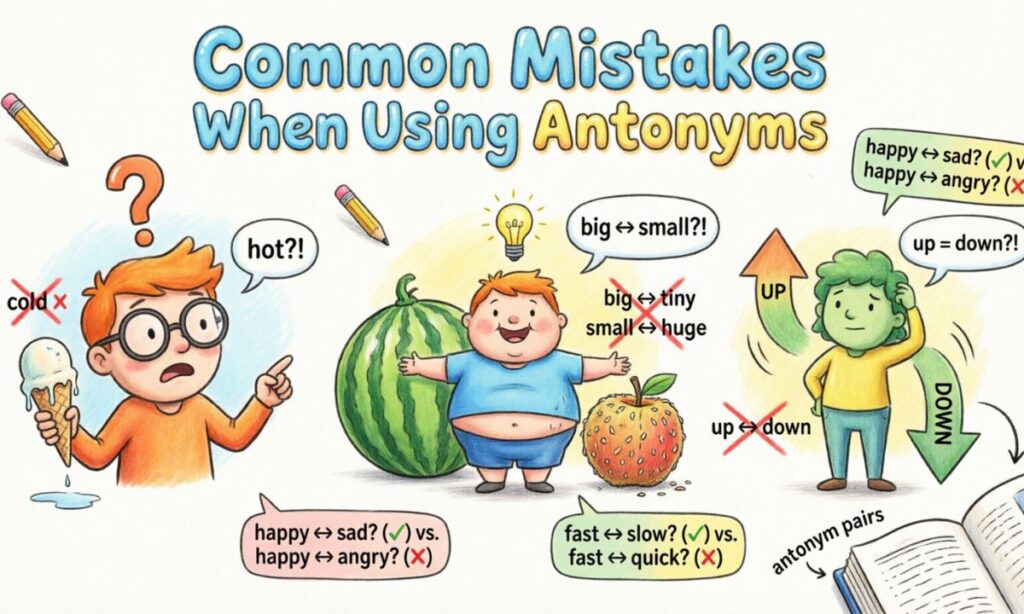
Even careful writers make errors when picking the opposite of nonchalant. Here are the most frequent ones:
Mistake 1: Using “chalant” as a word. There is no such word in English. The opposite of nonchalant must be expressed through other vocabulary, not by removing the prefix.
Mistake 2: Treating all antonyms as interchangeable. Anxious and enthusiastic are both opposites of nonchalant, but they describe completely different emotions. Context always determines which one fits.
Mistake 3: Confusing intensity levels. Using “disturbed” when “perturbed” is more appropriate can make someone sound more extreme than intended. Always calibrate emotional weight.
Mistake 4: Forgetting register. Using “flustered” in a formal academic essay sounds out of place. Choose antonyms that match the tone of your writing.
Mistake 5: Over-relying on one category. Many writers default to “anxious” as the only opposite of nonchalant. Explore the full spectrum to add variety and precision to your writing.
Practice Exercises
Exercise 1: Multiple Choice
Choose the best opposite of nonchalant for each sentence.
1. The student was ________ about failing her final exam. a) nonchalant b) eager c) anxious d) flustered
Answer: c) anxious
2. He was ________ about the charity drive, staying until midnight to help. a) tense b) passionate c) perturbed d) unsettled
Answer: b) passionate
3. She felt ________ when her boss changed the presentation topic two hours before it began. a) earnest b) caring c) flustered d) invested
Answer: c) flustered
4. A ________ parent always knows when something is wrong with their child. a) nonchalant b) attentive c) disturbed d) zealous
Answer: b) attentive
Exercise 2: Sentence Completion
Fill in the blank with the most appropriate opposite of nonchalant from the word bank.
Word Bank: concerned, eager, tense, earnest, agitated
1. She was ________ to learn everything about the new software on her first day. (eager)
2. The atmosphere in the meeting room grew ________ as the results were announced. (tense)
3. His ________ apology made everyone believe he truly regretted his actions. (earnest)
4. The doctor was ________ when the patient’s symptoms did not improve after a week. (concerned)
5. He became ________ when the package still had not arrived a week after the expected date. (agitated)
Advanced Topics: Nuances and Context
Picking the right opposite of nonchalant is not always straightforward. Nuance matters enormously.
For example, both “anxious” and “concerned” suggest worry, but anxious leans toward internal fear while concerned can be directed outward at another person’s situation. A parent might be concerned about their child’s health but anxious about their own medical test.
Similarly, “eager” and “enthusiastic” both describe positive engagement, but eagerness is about readiness while enthusiasm is about joy. A candidate can be eager to start a new job without being enthusiastic about every part of it.
Context also shifts meaning over time. In current casual speech, calling someone “invested” often implies emotional attachment in relationships, while in formal business contexts, it still primarily means committed to an outcome.
The broader your vocabulary of antonyms for nonchalant, the more precisely you can communicate. Strong writing comes from making these distinctions deliberately rather than grabbing the first word that comes to mind.
Read This: Treck or Trek – Clear Up the Confusion Once and for All
How Tone and Body Language Change the Meaning of Nonchalant Antonyms?
Words alone do not always capture the full picture. Tone and body language often communicate the opposite of nonchalant more powerfully than vocabulary does.
Anxious and Nervous Expressions:
- Rapid breathing or shallow breath
- Fidgeting with hands, clothing, or objects
- Avoiding eye contact or darting eyes
- Speaking quickly or stumbling over words
- Sweating, flushing, or visible shaking
Concerned and Caring Signals:
- Leaning forward during conversation
- Maintaining steady eye contact
- Asking follow-up questions
- Nodding and mirroring the speaker’s emotion
- A softer, lower voice tone that signals safety
Enthusiastic and Excited Indicators:
- Wide eyes and an open posture
- Speaking faster and with rising intonation
- Smiling broadly and gesturing actively
- Moving closer to the subject of discussion
- High energy movement and restlessness from anticipation
Agitated and Disturbed Markers:
- Pacing or inability to stay still
- Raising the voice or sharp changes in pitch
- Tight jaw, clenched fists, or crossed arms
- Short clipped sentences and quick interruptions
- Frowning, furrowed brow, and pressed lips
Formal and Serious Demonstrations:
- A measured, even tone with deliberate pauses
- Minimal facial movement but focused eye contact
- Upright posture and controlled gestures
- Slower and more precise speech patterns
- Written communication that uses formal language and structured arguments
Understanding these physical and tonal cues helps you recognize the opposite of nonchalant even when no words are spoken. Human behavior is rich with signals, and matching your word choice to those signals creates more authentic, believable communication.
Last Words
The opposite of nonchalant is not one emotion but an entire landscape of human feeling. From anxious and nervous to passionate and zealous, from concerned and attentive to agitated and flustered, each antonym captures a specific way that people engage with the world around them.
Understanding these 22 antonyms gives you more than vocabulary. It gives you insight into how people behave, communicate, and respond to the things that matter to them. The next time you are reading, writing, or simply observing someone, notice whether their behavior is nonchalant or something from this list.
Language is at its best when it is precise. Knowing the opposite of nonchalant in all its forms is one more step toward expressing ideas and emotions with clarity, confidence, and genuine human depth. Keep practicing, keep noticing, and your vocabulary will grow alongside your understanding of people.

Welcome to MeaningDeck! I’m Alex, an AI-Powered SEO, and Content Writer with 2 years of experience.
I help websites rank higher, grow traffic, and look amazing. My goal is to make SEO and web design simple and effective for everyone.
Let’s achieve more together!